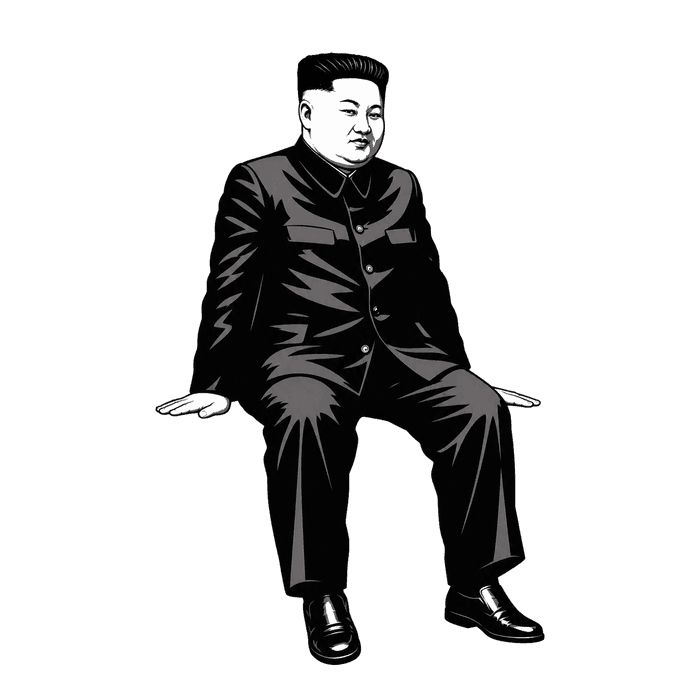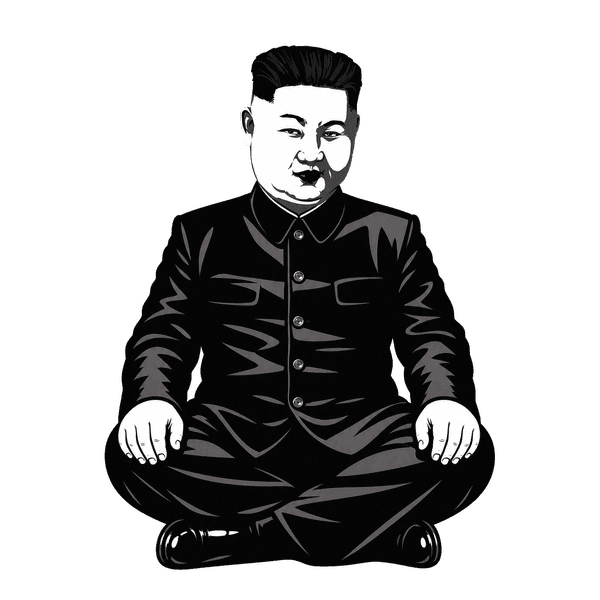

North Korean honorific language is unusual among the world's political vocabularies in that it was built, deliberately and over decades, to be inexhaustible. Most states settle on one form of address for a head of state and stop. The Democratic People's Republic of Korea instead accumulated titles the way other countries accumulate public holidays — steadily, without repealing the earlier ones, and with each addition intended to outshine the last.
The Bureau's catalogue draws on that tradition. Forty-eight titles are currently in conferral. They are not translations of any single official list; they are assembled from the general register of honorifics that has attached to the Kim family and its institutions since 1948, arranged by the Bureau into families for the purpose of assignment.
Where the titles come from
Three sources feed the catalogue. The first is celestial: sun, star, sky, and heaven imagery, used to place the subject above ordinary weather and ordinary politics. The second is martial: the vocabulary of command, invincibility, and steel, inherited from the wartime period and never retired. The third is domestic and paternal — father, mother, family — which does the strange and effective work of making an entire state feel like a household with one parent in it.
A fourth, smaller strand is industrial and technological, and it is the most recent. Titles referring to machinery, computing, and production date from the late twentieth century onward and tend to sound the most peculiar in English translation, which is precisely why they have travelled furthest online.
The genius of the form is that no title ever cancels another. They accumulate. A person may hold nine simultaneously and each remains fully in force.
The four families
The Bureau assigns every title in the catalogue to one of four families. The family determines the register of the honour — its tone, its imagery, and the sort of comrade it tends to suit.
Celestial (14 titles)
Sun, star, heaven, sky. Conferred on those whose contribution is felt broadly rather than measured precisely. Includes Bright Sun of the Twenty-First Century, Guiding Star, and Heaven-Sent Hero.
Martial (13 titles)
Command, invincibility, iron, steel. For the decisive, the stubborn, and those who finish things. Includes Invincible General, Peerless Steel-Willed Commander, and Ever-Victorious Iron-Willed Brilliant Commander.
Paternal (11 titles)
Father, mother, guardian, family. The warmest register in the catalogue and, in the Bureau’s experience, the most-requested by gift purchasers. Includes Respected Mother of the Great Family and Guardian Deity of the Planet.
Industrial (10 titles)
Production, machinery, computation. The strangest and most modern family. Includes Master of the Computer Who Surprised the World and Great Sun of the Twenty-First Century Industry.
The catalogue
A representative selection follows. The full forty-eight are visible in the public register, where each entry shows how many comrades currently hold it.
Invincible General
Martial. Among the oldest honorifics in circulation and still the most conferred. Suits those who do not negotiate.
Bright Sun of the Twenty-First Century
Celestial. A modernising title — the sun imagery is traditional, the century is not. Popular with people under forty.
Guiding Star of the Twenty-First Century
Celestial. For the comrade others orient themselves by, usually without being asked to.
Peerless Steel-Willed Commander
Martial. Awarded for stubbornness of a productive kind. The Bureau confers it frequently on the self-employed.
Respected Mother of the Great Family
Paternal. The catalogue’s warmest honour, and the one most often given as a gift.
Guardian Deity of the Planet
Paternal, at scale. For those whose sense of responsibility exceeds their jurisdiction.
Master of the Computer Who Surprised the World
Industrial. The Bureau’s title for the online age. Conferred on those who fixed the router.
Ever-Victorious Iron-Willed Brilliant Commander
Martial. Four modifiers, no apology. Reserved for the genuinely relentless.
Heaven-Sent Hero
Celestial. For the comrade who arrives at exactly the right moment and does not mention it afterwards.
Great Defender of Socialism
Martial-civic. For those who hold a position in an argument for longer than is reasonable.
How a title is assigned
Assignment follows a two-minute assessment. The questions are not about achievement — the Bureau has no interest in a curriculum vitae — but about disposition: how a person behaves when unobserved, what they do with an unexpected free hour, whether they finish what they begin. The catalogue is then searched for the honour that fits.
A provisional title issues immediately and free of charge. It carries no seal and no entry in the public register. Ratification engages the calligrapher, the seal, the registrar and the four-act ceremony, and places the holder permanently in the register.
Choosing your own
You cannot. This is the single most common request the Bureau receives and it is refused without exception. A self-appointed title is a screen name. The entire value of an honour is that somebody else decided you should have it, and that the decision is on record where anyone may inspect it.
The Bureau has assessed more than eight thousand comrades and has never yet issued the title a person expected. It considers this evidence that the method works.
Common questions
How many North Korean honorary titles are there?
The Bureau maintains forty-eight titles in active conferral, arranged into four families: celestial, martial, paternal, and industrial. The full catalogue is visible in the public register.
What is the most famous North Korean title?
Invincible General and Dear Leader are the most widely recognised outside Korea. The Bureau confers the former and declines to confer the latter.
Can I choose which title I receive?
No. Titles are assigned by assessment. The Bureau refuses all requests for a specific honour, on the grounds that a self-appointed title is not an honour at all.
Are these real North Korean government titles?
No. The Kimmies is a parody and has no affiliation with any government. The titles draw on real honorific language but are conferred by the Bureau alone and are entirely honorary.
How much does a title cost?
A provisional title is free. Ratification — seal, ceremony, and a permanent entry in the public register — costs $9 once.
What does ratification actually add?
A sealed certificate, a four-act ceremony, and a permanent searchable entry in the public register. Provisional titles carry none of these.